The Mighty Flying Eagle: Greg Davis's book, and the club's early history in one read
The complete 1993 club history is now readable online. Here is who wrote it, and a summary of how Hatherleigh went from a public meeting in 1946 to its first A Grade premiership in 1971.
From the archives · 1947
Added to the archive 11 min readHatherleigh FNC
The Mighty Flying Eagle 1947–1993 is now on the website as a page-turning book. It is 228 pages, and it was written for the club by one local volunteer. You can read it here. This story covers the author, then the early history in about ten minutes, so you know where to look.
Who is Greg Davis?
Greg Davis was born around 1951 to Jack and Florrie Davis, who took up a Soldier Settlement block near Mt Hope in 1950. It sat about 11 km from both Hatherleigh and Rendelsham.
He played Colts at Hatherleigh in 1967 and 1968 and began umpiring in 1971. He returned to play in 1975, retired from playing in 1977, and went back to umpiring in 1979. His last game with the whistle was at the end of the 1991 season. In the 1971 grand final he ran a boundary in his first year as an umpire, and he tells that story himself in the book.
By his own account he had no writing experience. He offered to write the history, and he was told early on that the club's records had been burned. They had not. He worked from the early minute books, the South Eastern Times files, the Mid S.E. football budgets and, for later years, the club year books, and he interviewed many past players and officials. The research took about 18 months. The book was published in 1993 by the Hatherleigh Sport and Recreation Centre, with the committee backing it financially.
He was clear about what it is: a history book rather than a story book, though plenty of stories get in. He asked future players and netballers to write their memories down so that one day there could be a sequel. Brian Skeer's foreword praised the detail and said the history could have been lost as the early members aged.
Before 1947: the prologue
The club did not start in 1947. Greg found a Hatherleigh club in 1906, then called the Wanderers. Its first meeting was on 14 May 1906, and its first game was on 18 June that year.
A small record book kept by Ken Watson covers 1923 to 1933. In it, Duncan (Dinny) McKinnon is president for most of the 1920s. Membership cost five shillings. The jumpers were maroon with a blue band, bought from Collet's in Hindley Street, Adelaide, and one set of new jerseys in 1925 took about half that year's expenses. Home games were played in front of the Hatherleigh school. Opponents were Rendelsham, Beachport, Nangula, Robe and sometimes Millicent. Dances paid for much of it, and car hire to get players to away games was a regular cost. The records stop in 1931. Greg assumes the club lapsed, with the war to follow, and formed again in 1947.
1946: the meeting that formed the club
Football returned after the war, and the Mid South East League re-formed in March 1946. Brothers Ellis and Norman Skeer thought Hatherleigh could field a team and called a public meeting at the Hatherleigh school. Between 35 and 50 people came.
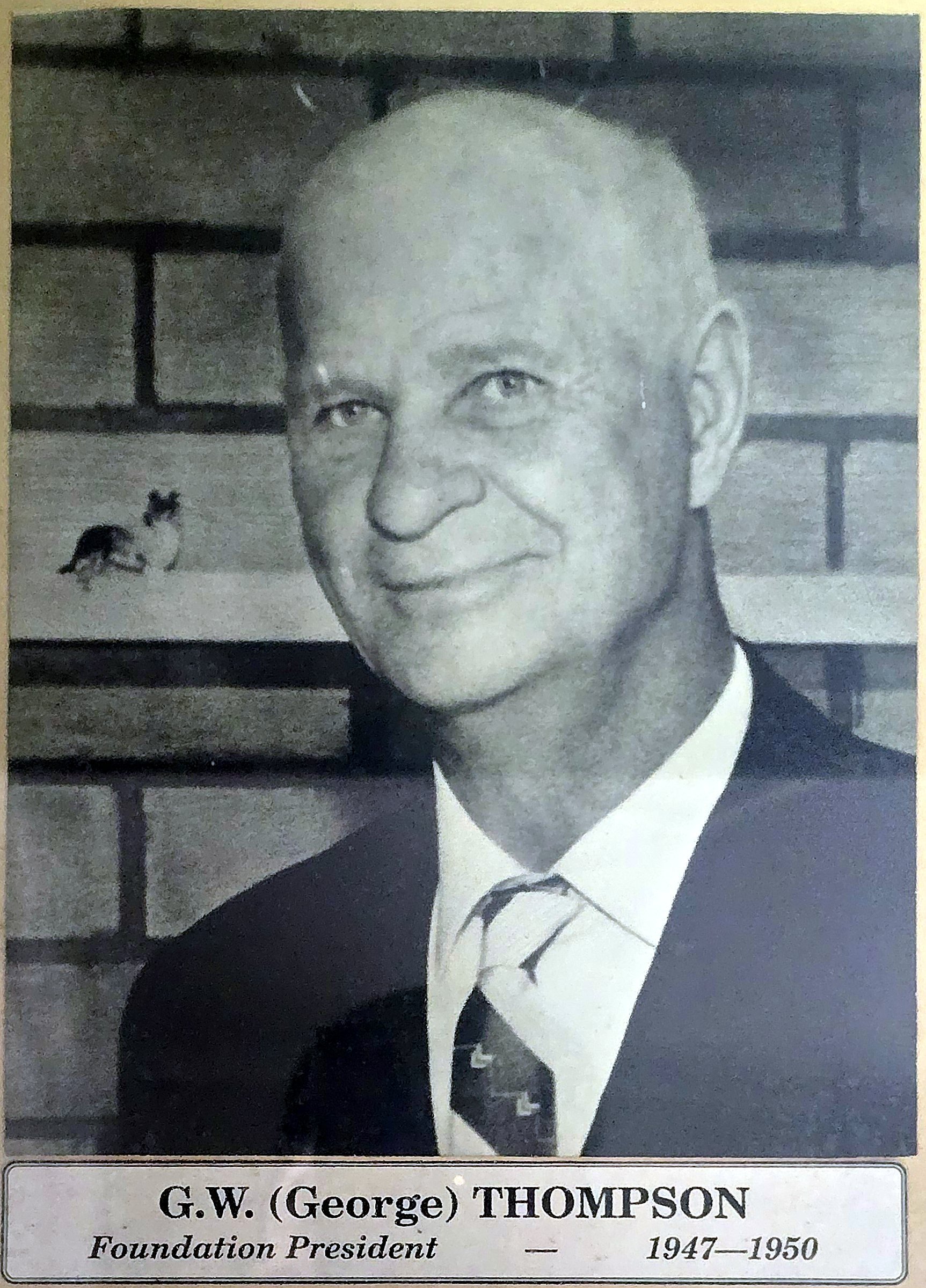
Not everyone agreed. George Thompson and his family thought local young men should keep playing for Millicent. Cecil Skeer, Frank Bell, Arthur Skeer and many of the future players argued for a club, and the vote was overwhelmingly in favour. George Thompson then congratulated the room, said his family would back the club anyway, and was nominated as the first president by Norman Skeer. Frank Bell was vice-president and Noel Bell was secretary. The committee also included Bernie Donlon, Norman Skeer, Ellis Skeer, Les Witmitz and Arthur Skeer.
The club would be the Hatherleigh Football Club. Rendelsham players were welcome, and Hatherleigh's oval was chosen because Rendelsham's was too small for the purpose. Millicent was not pleased and warned that a new club would weaken them, but it agreed to play practice matches in June 1946 and Hatherleigh won the first, 5.10 to 6.3. Rendelsham and Hatherleigh sides then played each other in July and August to find players. Boots were scarce straight after the war. Harold McEvoy played in army boots, and others tacked leather strips to their soles in place of sprigs.
The Soldier Settlement Scheme was also bringing new families. Greg lists the Leopolds, Prances, Marsdens, Keatleys, Snooks, Murchs, Majors and Davises among them, and says their descendants are still at the club.
1947: year one
The first colours were blue with white collar and cuffs, so the club was the Blues. The jumpers were knitted by Verna Witmitz on her knitting machine, using 106 skeins of wool. Facilities were a 10 ft by 25 ft galvanised iron cricket shed, a pine-offcut changeroom with a hessian bag for a door, and no showers or water. Players went home to wash, and that continued until the mid-1950s.
Millicent decided to join the South East and Border League that year, which cleared a place in the Mid S.E. for Hatherleigh. The first official match was against Glencoe on 3 May 1947. Hatherleigh lost 6.8 to 18.11, with Bernie Donlon as captain and de facto coach. It won 8 of 14 games, missed the finals on percentage after losing the last game to Beachport, and beat Kalangadoo, who finished second, in July. Eric Parsons won the league's best and fairest and the club's first best and fairest. The club finished its first year with a credit balance of about eleven pounds.
1948 to 1952: the early years
In 1948 the club finished fifth, with Dick Walker the best and fairest. Tantanoola and Millicent both argued about where Hatherleigh players "belonged", and club boundaries were an issue for many years.
1949 was the first grand final year. Under captain-coach Eric Parsons the club won the Legacy Lightning Carnival at Kalangadoo, beating Glencoe. In the home and away season it beat Mt Burr 26.17 to 3.3, with Dick Walker kicking 14.6 from the centre. Hatherleigh then lost the second semi final to Glencoe but beat Tantanoola in the preliminary final to reach the grand final. Eric Parsons had left for a dairy farm in Gippsland, and transport made it impossible for him to return. Without him, Hatherleigh lost 8.5 to 5.8. Trevor Skeer, Noel Bell, Dick Walker and Ian Smith all told Greg the team would have won with him. The book calls 1949 the year the club lost its chance.
In 1950 the club played in an unofficial B Grade, which became official in 1951. Dick Walker, Jack Medhurst and later Bernie Donlon and Alan Thompson moved to Millicent, and the club slid. It finished sixth in 1950 and last in 1951 with two wins. In 1951 it also switched to a blue jumper with a large white V.
In 1952 training moved to Wednesday nights, and coach Fred Bateman took the club to fourth. Before that, training had been a few kicks on Sunday afternoon and a bottle of beer. Players got to training by horse, bike or lift.
1953 to 1959: paid coaches, the changerooms and the hall
1953 brought the first paid coach: Noel Lafsky, an ex-Glenelg player of 23, for £100. He ran four laps without a break on the first night. Lafsky won the Mail Medal and the club finished second, though it lost both finals. In late 1953, after Millicent recruited seven Hatherleigh players, the club nearly folded. The meeting on 24 March 1954 decided to continue. In April 1954 the club voted to leave the Mid S.E. to seek stronger competition and then applied to rejoin once the league adopted open territories.
The Hatherleigh Hall opened on 30 July 1954 at a cost of £2,500. The football club had contributed £300 for two changerooms in the building, and that money was returned in 1958 for the new changerooms. Fred Bolton coached in 1955 and the club reached the preliminary final, and its B Grade made its first grand final, losing to Glencoe at McLaughlin Park. In 1956 the club paid coach Ray Gates £100 for a car and he disappeared. Stan White replaced him. Fifteen of the first 20 players that year came from eight families.
Clive Stevens coached in 1957 and 1958. In 1958 the club built new stone changerooms on the old tennis court, with a shower and toilet block and an umpires' room. They were officially opened on 12 July 1958, and Greg says they are still in use in 1993. Alan Thompson worked three weeks straight cutting stone for builder Frank Skeer. That year Ray Skeer donated the Skeer Perpetual Medal for A Grade best and fairest, and Clive Stevens won the first one on a count-back from Lance Skeer. The A Grade won its first final since 1949 and lost the preliminary final by two points.
In 1959 Ken Roberts, who had played 78 games for Richmond, took over, and the Colts started. The club missed the finals, and Albert Parsons died after being taken ill during a B Grade game against Mt Burr.
1960 to 1966: the Eagles
1960: Ex-Glenelg player Brian Potter coached, and the club won the Lightning Premiership. Lance Skeer won the Mail Medal on a count-back. A women's committee was formed on 13 April 1960, with Betty Thompson as president and Jean Howe as secretary. The seniors drew the preliminary final against Mt Burr and lost the replay.
1961: At the March annual meeting, members swapped to the colours of West Torrens, blue and gold with black shorts, and took the name Eagles. That ended the Blues era. The club won its second Lightning Premiership, and the Colts won its first premiership under Eric Parsons, beating Mt Burr 6.8 to 2.2. The first life memberships went to Arthur Skeer and Ian "Rocky" Smith.
1962 to 1963: The club had a poor 1962 and no senior side made the finals in 1963. In 1963 Hatherleigh also entered netball, then called basketball. Ivy Skeer called a meeting on 17 April, and Dot Allen was the first coach. The team trained on Mrs Skeer's tennis court in Millicent and changed behind a hedge. It lost the B Grade grand final by one goal to Port MacDonnell. Cecil Skeer and Les Witmitz became life members.
1964: Phil Walker was appointed coach at 18, which Greg says makes him one of the youngest senior coaches ever appointed. The B Grade won the club's first Seconds premiership against Mt Burr. Don Leopold won the league's Carthew Medal. The club also won a liquor licence that year, one of the first country football clubs in South Australia to apply. Don Allen presented it to the licensing court and was questioned for over four hours.
1965 to 1966: The club connected mains power, bored for oval watering, and raised money by growing barley, running sheep and cattle, and holding a rabbit drive. In 1966 Phil Walker won the Mail Medal. Alan Thompson, son of the foundation president, became a life member.
1967 to 1970: new clubrooms
Barry Walker, a former Mt Burr Mail Medallist, became coach in 1967 and lost his first game when Hatherleigh lost two points on protest. Garry Clifford won the Mail Medal that year. The club planted cypress trees, built a new scoreboard and toilets, and in 1968 decided to incorporate. The Clifford Family Perpetual Shield matches against Furner began in 1968 but lasted only three years instead of ten.
In 1968 the club missed the finals by 1.2 per cent after winning its last seven minor-round games, and Barry Walker called it his biggest disappointment. The Seconds reached the grand final, which they lost to Glencoe.
A committee of Trevor Skeer, Colin Burdon and Noel Bell negotiated for new clubrooms in 1968, and Garry Clifford became the licensee, a role the book says he still held in 1993. A building committee of Trevor Skeer, Alex Galwey, Colin Burdon and Brian Skeer supervised construction, and Galwey gave three months of voluntary work. On 6 June 1970 the new licensed clubrooms were opened by Mid S.E. president L. G. Wright. They cost $10,200 and included a bar, a carpeted area and a billiard table. Norman Skeer and Fred Bateman were made life members at the opening, and Bateman was also remembered for 18 years of playing saxophone at club functions for free.
The basketball club (later netball) also won its first premiership in 1970, when the D Grade girls beat Kalangadoo. The Mini Colts won an unofficial premiership in 1970 under Barry Walker.
1971: the first A Grade premiership
Ian Rowarth coached in 1970 and left, and the club appointed 25-year-old school teacher Wayne Johnson of East Gambier. Greg and others describe him as an astute tactician who focused training on skills. Recruits included Bob Edmonds (also Seconds coach), Barrie Smith, Peter Snook, Mike Nixon and Laurie Smith.
Hatherleigh won the Lightning Carnival and stayed unbeaten until Tantanoola beat them by 31 points on 5 June. That night the club unveiled a new honour board. Johnson and selector Jack Kelly wrote the club song "The Mighty Flying Eagle" during the season to build team spirit. It is the song the club still sings.
Hatherleigh finished top of the minor round and won the second semi final against Mt Burr, 12.8 to 7.11. The selectors chose their grand final side after discussing the muddy Mt Burr oval, and John Madden was placed on the muddy flank all day on Johnson's instructions. On grand final day, 1971, the Mini Colts won the first official Mini Colts premiership 8.9 to 1.1 over Mt Burr and the Seconds lost to Port MacDonnell. The A Grade beat Glencoe 11.9 to 7.11 for Hatherleigh's first A Grade premiership in the Mid S.E. Goalkickers were Barry Walker, Mike Nixon (3 each), Tony Thompson (2), and Wayne Johnson, John Madden and Peter Varcoe (1 each). Madden was best on ground. The celebrations lasted all weekend.
Greg Skeer won the R.W. Skeer Medal that year. Johnson left for Victor Harbor, and Greg says many people regard him as the best coach the club has had. Neil Skeer's polished-boots bet is told in its own story.
What happened next
The book continues to 1993. Its later chapters cover the 1970s and 1980s, the Hatherleigh Sport and Recreation Centre, the golf club, club coaches and best and fairest winners, and the committee lists. For all of that, and for the photographs, read the book itself.
Copyright in the book remains with its owners. If you are in it, hold a photo shown in it or have a concern about any page, contact the club.
More stories
From the Archives1 October 2026
Half a tonne of red gum: how the Eagle landed at Hatherleigh
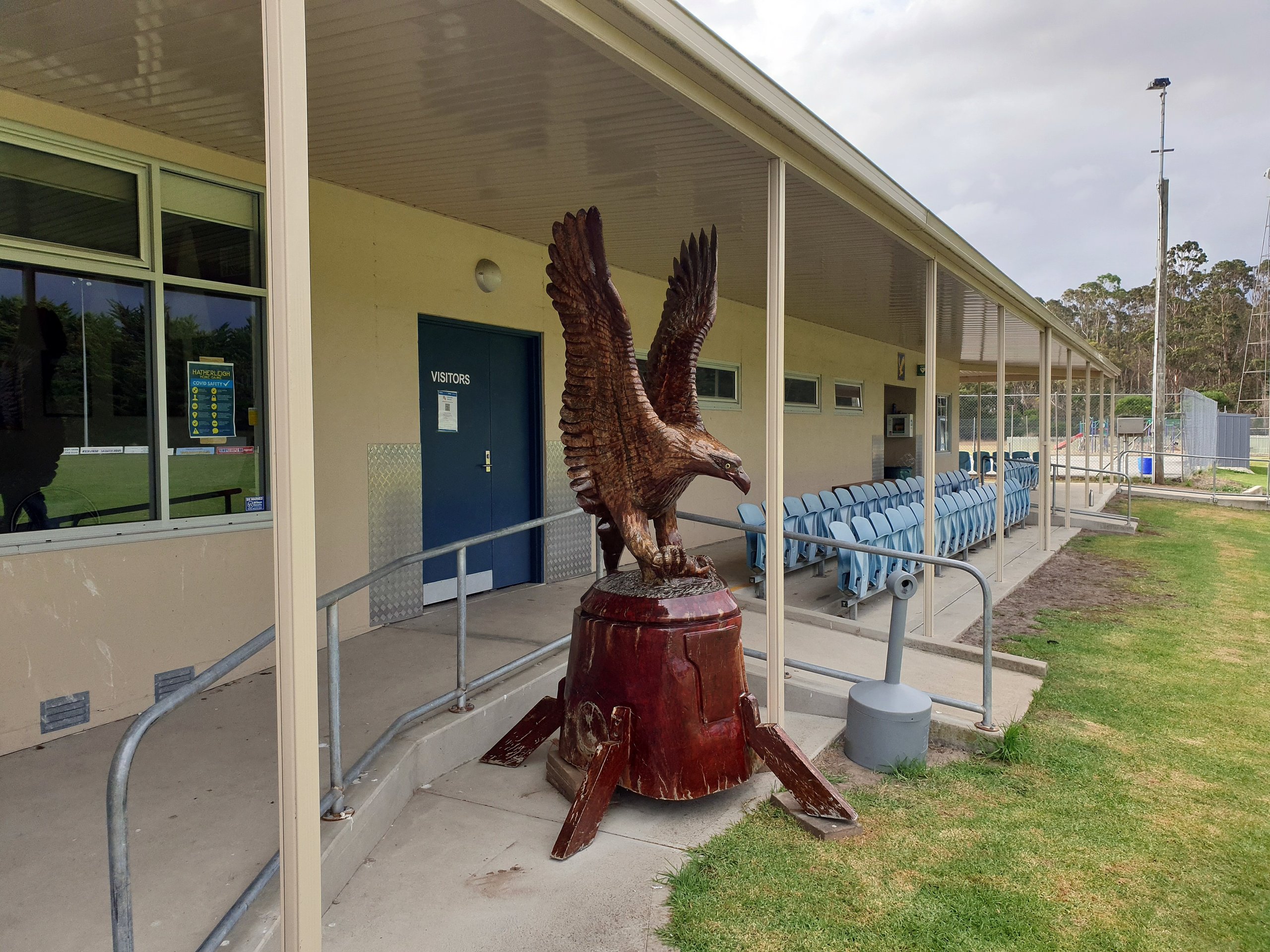
In March 2021 a hand-carved red gum eagle, more than two metres tall and about 500 kg, made the trip from Ant's Redgum Gallery in Millicent to the Hatherleigh clubrooms, thanks to four generous local backers.
Read more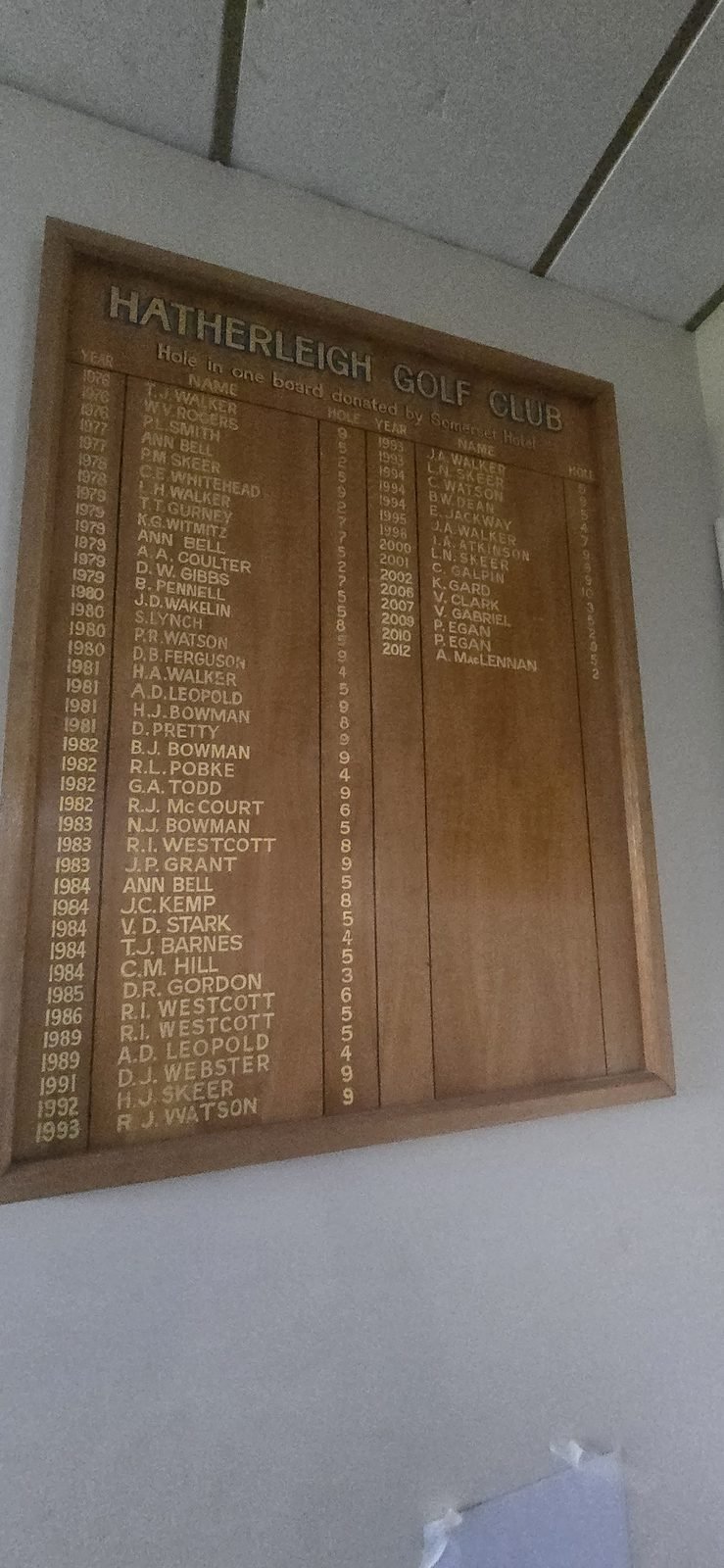
From the Archives29 September 2026
Nine holes in the bush: the Hatherleigh Golf Course, 1976–2024
For 48 years the Hatherleigh Golf Course offered nine par-3 holes cut through gums and yakkas. This is the story of the course, from Gladys Smith cutting the ribbon in 1976 to the last Phil Keatley Cup in June 2024.
Read more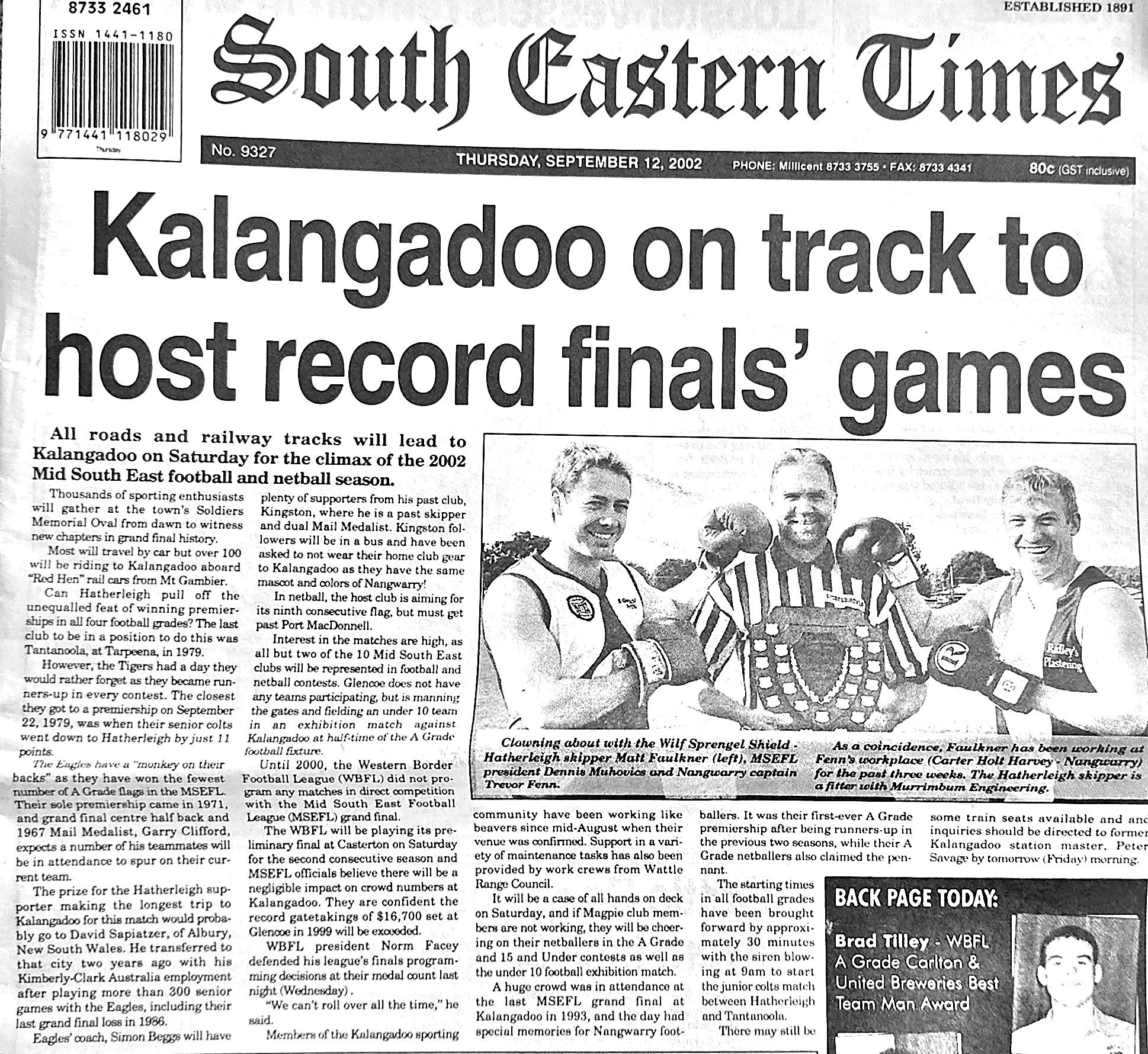
From the Archives26 September 2026
From the Archives: Four Grand Finals at Kalangadoo — Hatherleigh's 2002 Finals Week
In September 2002 Hatherleigh went to Kalangadoo with teams in all four football grand finals, a young coach, a batch of recruits and 31 years of A Grade waiting behind them.
Read more